Three proof thermal printing paper and adhesive barcode stickers achieve the core functions of waterproofing, oil resistance, and friction resistance through material composite and structural design. These label materials can maintain information integrity in complex environments such as logistics and warehousing. The essence of its technology is the synergistic effect of chemical stability of thermal sensitive coatings and physical protection of surface materials.
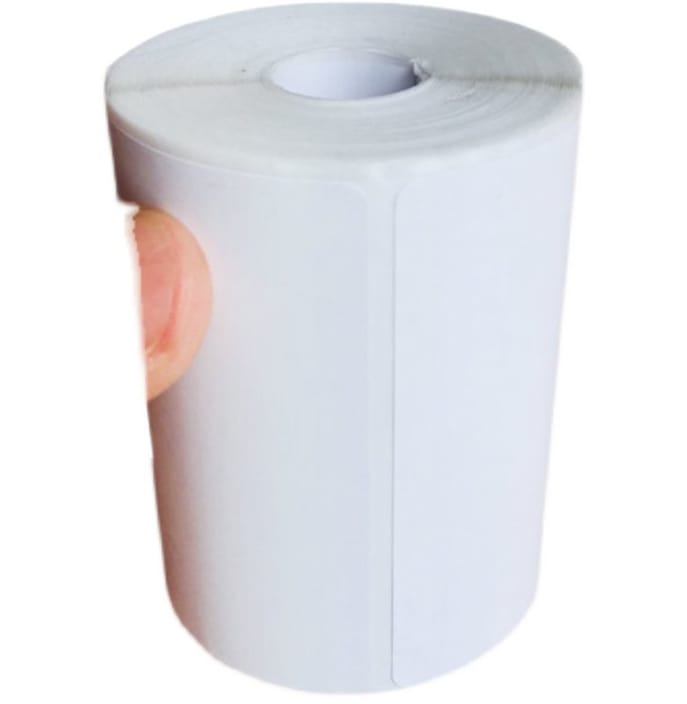
The color developing layer of thermal paper contains latent dyes and color developing agents, which react chemically with heat to produce graphics and text. The three proof characteristics stem from three levels: the substrate is made of polymer film or specially treated paper to resist liquid penetration; Adding protective agents to thermosensitive coatings to enhance chemical resistance; Surface coating or special coating forms a physical barrier. The adhesive structure is ensured to be reliable through the combination of release paper, adhesive layer, and surface material.
The industry usually evaluates the protective performance according to ASTM D6401 standard. Oil resistance depends on the degree of oil repellent treatment of the surface material, waterproofing is related to the porosity of the substrate, and abrasion resistance is affected by the hardness of the surface coating. Logistics labels focus more on short-term protection and cost balance, while industrial scenarios emphasize long-term durability. Material selection needs to balance protection level, printing compatibility, and environmental adaptability.
In the scenario of express sorting, the three proof feature can resist rain splashing and package friction; Food cold chain labels need to withstand both low-temperature condensation water and oil contamination. The selection of different adhesive systems (such as permanent adhesive/removable adhesive) can affect the adhesion effect on rough surfaces, which is a key scenario based consideration factor in the design of adhesive materials.