A while ago, a news story shocked Tadpole Jun: According to the Weibo account of Life Times and a Spanish website, a 6-year-old girl showed symptoms of precocious puberty due to shopping receipts in her regular player account.
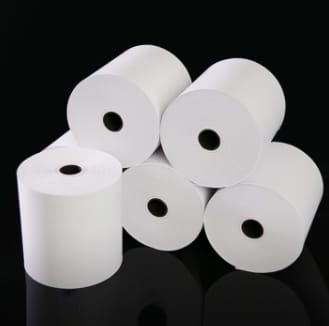
Supermarket receipts use thermal paper, and many paper products we use in our daily lives, such as movie tickets, lottery tickets, etc., also use thermal paper.
The shopping receipts are made of thermal paper
What is thermal paper and what is its principle?
What we usually refer to as printing is the process of transferring ink onto paper in a specific way, ultimately presenting the desired text or image on the paper.
Inkjet printers and laser printers are the most commonly used types of printers in offices. Inkjet printers print by spraying ink droplets, while laser printers use electrostatic attraction to first use toner cartridges (also known as photosensitive drums) to absorb carbon powder, and then transfer them onto paper.
However, the movie tickets, lottery tickets, shopping receipts and other documents we mentioned above are not printed in this way, using a special material called “thermal paper”.
Compared to ordinary paper, thermal paper has a thin coating on its surface, which contains a special chemical substance called latent dye.
Due to the colorless nature of the latent dye, thermal paper looks no different from ordinary paper at room temperature. As the temperature increases, the latent dye and acidic substances melt into a liquid, and the molecules in the composition undergo chemical reactions. As a result, color quickly appears on the white paper. The discoloration of paper caused by high temperatures is the reason why thermal paper is named after it.
Having thermal paper alone is not enough. To print text or graphics on its surface, it also requires the cooperation of a thermal printer. The internal structure of a thermal printer is very simple: there is no ink cartridge, and the ink has already been pre coated on the thermal paper. It mainly consists of two major components: the drum and the print head.
After placing the thermal paper into the printer, it will continue to move forward under the drive of the drum, and when it comes into contact with the print head, it will start working. Careful observation reveals that there are many tiny semiconductor components on the surface of the print head, which can be heated in specific areas of the paper according to the text or graphics we want to print.
At the moment when the thermal paper comes into contact with the print head, the dyes and acidic substances on the surface of the thermal paper will melt into liquid at the high temperature generated by the print head, accompanied by a series of chemical reactions, and the content we need will appear on the surface of the paper.
Missing handwriting
Although thermal paper has the characteristics of fast printing speed and low noise, there is also a practical problem: after a certain period of storage, the handwriting on thermal paper will gradually fade away.
This is because at high temperatures, the latent dye on the thermal paper undergoes a chemical change to form another colored structure, which is unstable and easily influenced by the external environment.
After printing a receipt, it will come into contact with various chemicals in the air, and these subtle chemical collisions may cause the dye on the thermal paper to return to a colorless state.
In addition to these objective factors, there are also many ways to make fonts disappear through human factors. Thermal paper, as the name suggests, is a type of paper that is sensitive to “heat”. When we need the handwriting to disappear quickly, we can place the thermal paper under sunlight or a desk lamp. As long as the temperature reaches a certain condition, the unstable chemical properties will cause the handwriting to disappear.

The other is to use substances containing a lot of organic solvents to remove fonts on thermal paper. The organic solvent itself is a very effective cleaning agent, and the commonly used perfume and toilet water are also organic solvents.
Concerns from Consumers
In recent years, thermal paper has raised concerns among many consumers due to the presence of bisphenol A. Bisphenol A is an acidic substance, and the color of thermal paper is the result of a chemical reaction between bisphenol A and a latent dye.
Research has shown that bisphenol A on thermal paper can enter the human body through “touch”. The latest experiment confirms that after prolonged exposure to thermal paper, the content of bisphenol A in urine will increase. Due to the chemical structure of bisphenol A being similar to the estrogen – estradiol secreted by the human body, many people are concerned that this substance will interfere with the endocrine system in the body, leading to precocious puberty and increasing the risk of disease.
It should be pointed out that the concentration of bisphenol A entering the human body through thermal paper is very low, and there is currently no conclusive data to prove that it will have a negative impact on human health. However, in order to minimize the possible harm, many manufacturers have begun to replace bisphenol A with other acidic substances.
From this perspective, thermal paper can be considered a natural “intelligence tool”, but if secret information is really transmitted in this way, there is also a risk of leakage!