Thermal paper is a special type of paper that develops color through thermal induction, widely used in scenarios such as cash register receipts, logistics labels, medical records, etc. The core principle is that the color developing substances in the paper coating undergo chemical reactions upon heating, and clear text or images can be quickly generated without the need for ink. The convenience and efficiency of this type of paper make it an indispensable consumable in the modern printing field.
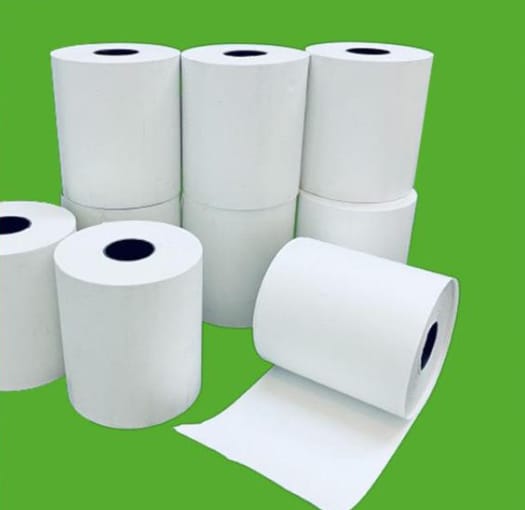
1、 Technical principles and core structure:
The color development function of thermal paper relies on three special coatings: the bottom layer is paper-based, providing basic support; The middle layer is the color developing layer, containing colorless dyes (such as fluorescent compounds) and color developing agents (such as bisphenol A); the surface layer is a protective layer, used to isolate air, moisture, and friction, and prolong the color development effect. When the heat of the thermal print head acts on the color developing layer, the dye reacts with the color developing agent to instantly form a visible pattern. This ink free printing method not only reduces equipment maintenance costs, but also avoids ink contamination problems.
2、 Key performance indicators and advantages:
The performance of thermal paper is mainly determined by its elongation and smoothness. High elongation means that the paper is not easily broken when subjected to force, making it suitable for high-speed printing equipment; Excellent smoothness ensures even contact between the print head and the paper surface, avoiding breakage or blurring. In addition, thermal paper produced from raw wood pulp has better whiteness and color stability, and is not easily faded after long-term storage. Compared to regular paper, it has a faster color development speed (usually completed within 0.1 seconds) and does not require drying time, significantly improving printing efficiency.
3、 Application scenarios and usage standards:
The application scope of thermal paper covers multiple industries such as retail, logistics, healthcare, and finance. For example, supermarket cashier receipts, express waybills, electrocardiogram recording papers, etc. all use this type of material. Attention should be paid to the storage environment when using: high temperature, high humidity, or direct sunlight should be avoided, otherwise it may cause the color developing layer to react prematurely or the protective layer to fall off. If you need to store important documents for a long time, it is recommended to choose specialized thermal paper with moisture-proof and anti-oxidation coatings, or scan it as an electronic file backup.
4、 Environmental and safety considerations:
Modern thermal paper production places more emphasis on environmental friendliness, such as using FSC certified raw wood pulp as raw material to ensure sustainable wood sources; Some products have reduced the use of potentially harmful substances such as bisphenol A by optimizing the coating formula. For users who need to customize specifications, it is necessary to confirm the production cycle in advance (usually around 15 days) and clarify the special requirements of the applicable scenarios (such as high temperature resistance, friction resistance, etc.) in order to choose the most suitable paper type.